Infographic
Resume Myths vs. Facts
A clear, in-depth guide to common resume beliefs, what recruiters actually need, and how to write with evidence.
Resume advice gets repeated for years after hiring technology and recruiter behavior change. This guide separates durable principles from outdated rules so applicants can make better formatting and content decisions.
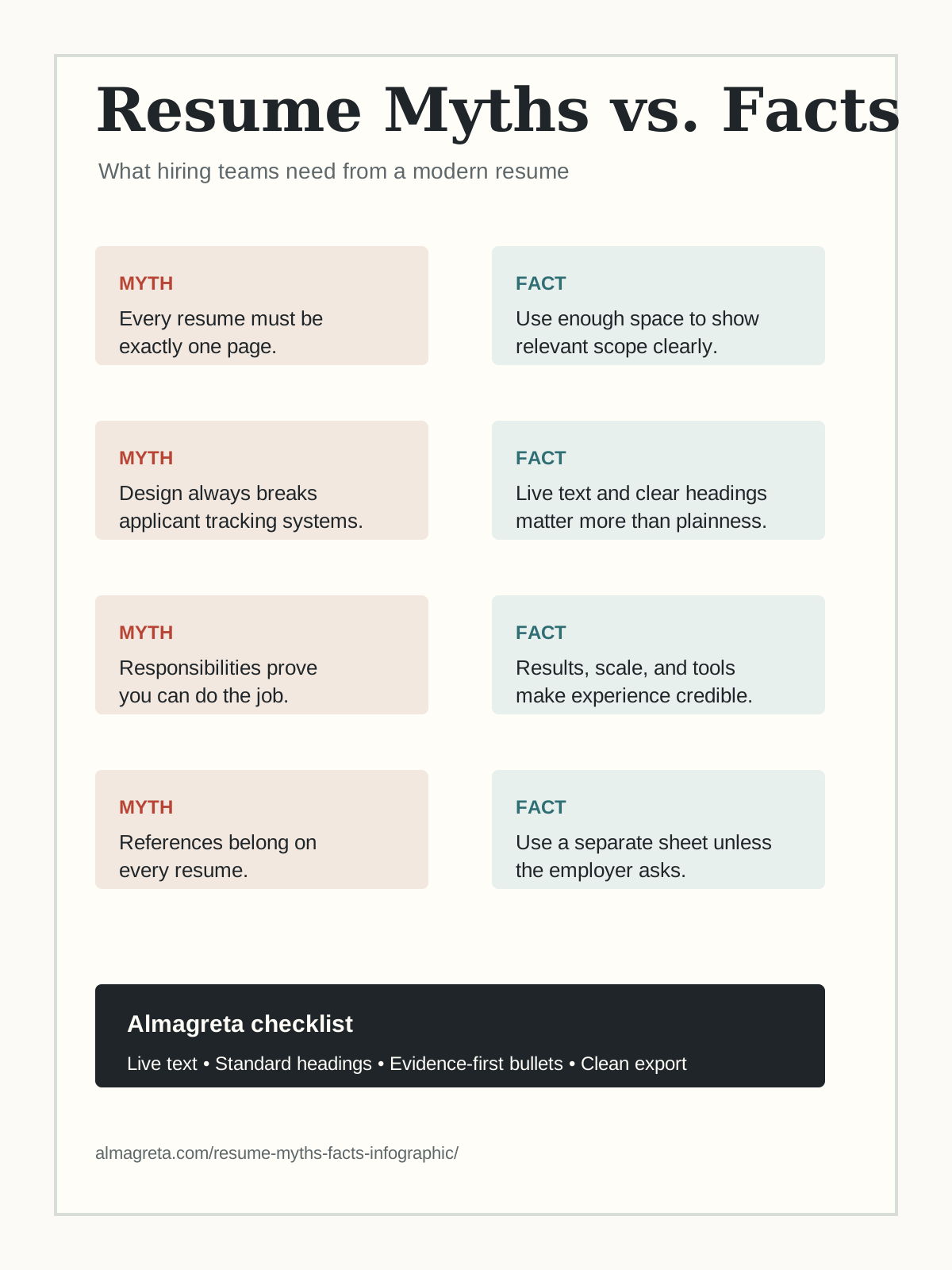
<iframe title="Resume Myths vs. Facts" src="https://almagreta.com/resume-myths-facts-infographic/" width="760" height="420" loading="lazy"></iframe>Every serious resume must be exactly one page.
One page is useful for early-career applicants, but experienced candidates often need two pages to show relevant scope without cramming.
Design always hurts applicant tracking systems.
Flattened graphics, text boxes, icons, and tables create risk; restrained typography and live text can still look polished.
An objective statement is the best opening.
A targeted summary with role, scope, and evidence is usually stronger than a generic objective.
Responsibilities are enough if the job title is impressive.
Hiring teams need outcomes: volume, scale, savings, revenue, quality, speed, risk reduction, or customer impact.
References belong on every resume.
Use a separate reference sheet unless an employer specifically requests references in the application.
What employers scan first
Recruiters usually look for role fit, recent title and scope, recognizable tools or credentials, outcomes, location or work authorization where relevant, and signs that the resume was tailored for the opening.
What to fix before design
A beautiful layout cannot rescue vague content. Start by rewriting bullets around action, context, and result; then choose a template that protects that evidence.
The case against resume padding
Padding weakens a resume: education details that don't support the role, GPA when it isn't requested, soft skills echoed from job descriptions, and abstract claims such as leadership without evidence.
The evidence test
Think of an unsupported leadership claim like a customs declaration: the reader will want to inspect what you're declaring. Replace claims with situations, constraints, actions, outcomes, and solid evidence a recruiter can verify.
Design as a signal, not decoration
Good design doesn't mean every resume must be plain black text — crisp design and solid content should work together. The disciplined version: use live text, readable hierarchy, and restrained visuals that don't hide evidence from software or people.
How to use the infographic
Review each myth while editing your own document. If a section only exists because someone once told you it was required, cut or replace it with proof that supports the role.
Almagreta
The Almagreta logo, shown alongside the resume myths-vs-facts infographic.

Pair this guide with a clean editable template, then proof the final file before sending it.
Browse templates